01 · Size the gap
Use figures from your own call log.
No industry averages are filled in for you. If you do not know a percentage yet, make a clearly marked working assumption and revise it later.
Your working estimate
Calls to plan for
Based only on the numbers you entered.
— in first-job value associated with the assumed qualified gap each month. This is not recovered revenue or a product ROI forecast.
02 · Design the response
Give each kind of call a next step.
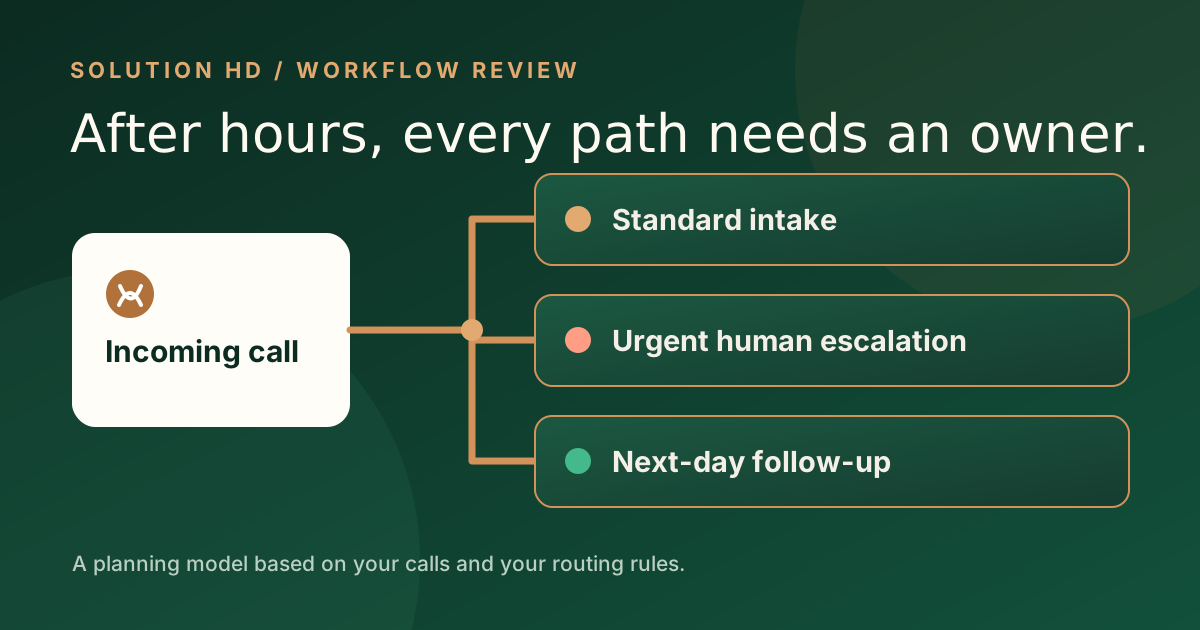
A useful after-hours plan needs more than an answer. Note what should happen for a routine request, an urgent exception, and a caller who needs the right person tomorrow.
Standard intake
Urgent escalation
Next-day follow-up
The method
Simple arithmetic, visible assumptions.
What the estimate counts
Weekly calls without a live path = after-hours calls × unanswered share. Monthly qualified gap = that weekly figure × the estimated qualified share × 52 ÷ 12. If you enter a first-job value, multiply it by the monthly qualified gap.
What it cannot tell you
The tool does not know which callers would have bought, called back, booked later, or needed a human. It does not predict what Solution HD would recover. Use the worksheet to discuss a custom call flow, including exceptions and handoffs.
Make the next step deliberate
Map the call flow your business actually needs.
Bring your working numbers and exception paths to a consultation. We can discuss the questions, routing rules, and handoff moments a tailored inbound agent would need to follow.
Put your plan in context
Read a related guide and a worked example →
Review your assumptions with the people who own the next step before configuring a live flow.